

5 Reasons Strategic IT Beats Reactive Support
Every business has IT hiccups. Someone forgets their password, a laptop dies in the middle of a presentation, or the printer eats another report. Those things happen. And yes, they generate support tickets which will always exist.
But if your entire IT strategy revolves around “fixing tickets,” you’re stuck in fix mode. And fix mode (Reactive IT) is expensive. It eats time, drains money, frustrates employees, and keeps your business in a constant cycle of interruptions.
Strategic IT is the way out. With vCIO guidance, regular planning, and proactive standards, Strategic IT doesn’t just react, it prevents. It creates a stable, optimized environment where technology fuels growth instead of dragging you backwards.
Here’s why Strategic IT beats reactive IT every time:
1. Tickets Solve Today’s Problems. Strategic IT Prevents Tomorrow’s
Support tickets are a necessary part of IT. They address problems after they’ve already happened, but they don’t stop them from happening again. Reactive IT is an endless loop of fixing, not improving.
Strategic IT steps ahead. Through proactive monitoring, regular technology reviews, and standards alignment, potential issues are identified and resolved before they become disruptions. Instead of just patching what’s broken, Strategic IT builds a stronger foundation.
A vCIO identifies recurring issues, evaluates vendor performance, and aligns your IT roadmap with your business goals. Vendors that fail to meet compliance standards are reviewed with leadership during strategic meetings to assess and mitigate risks.
2. Downtime Is Expensive. Prevention Saves Money
IT downtime isn’t just inconvenient…it’s costly. Every time employees can’t access systems, productivity stalls and revenue opportunities are lost. According to Gartner, the average cost of IT downtime is approximately $5,600 per minute.
Reactive IT waits for failures and then scrambles to fix them. Strategic IT proactively monitors systems, aligns them to best practices, and addresses weak points before they cause outages. The result is less downtime, more uptime, and significant cost savings.
3. Predictable IT Costs Beat Surprise Expenses
Reactive IT often comes with surprise bills like emergency fixes, unexpected hardware replacements, and costly outages. It’s unpredictable, stressful, and difficult to budget.
Strategic IT changes that. Through planning meetings, vCIO oversight, and technical alignments, businesses get a roadmap for their technology.
That means:
- Predictable upgrade cycles
- Budgeted hardware refreshes
- Managed licensing and software renewals
- No surprise expenses from preventable outages
By aligning spending with strategy, businesses can plan ahead instead of scrambling to pay for the next failure.
4. Your Vendors Are Being Managed, Not Just Used
Most SMBs rely on dozens of vendors for cloud services, software, communications, and more. But without oversight, vendors can fall behind on compliance, fail to deliver value, or quietly increase costs.
Strategic IT includes regular vendor reviews. A vCIO evaluates vendor performance, compliance posture, and contract terms to ensure they’re still the right fit for your business. Vendors that don’t meet standards are escalated to leadership for review.
5. IT Becomes a Business Driver, Not Just a Cost Center
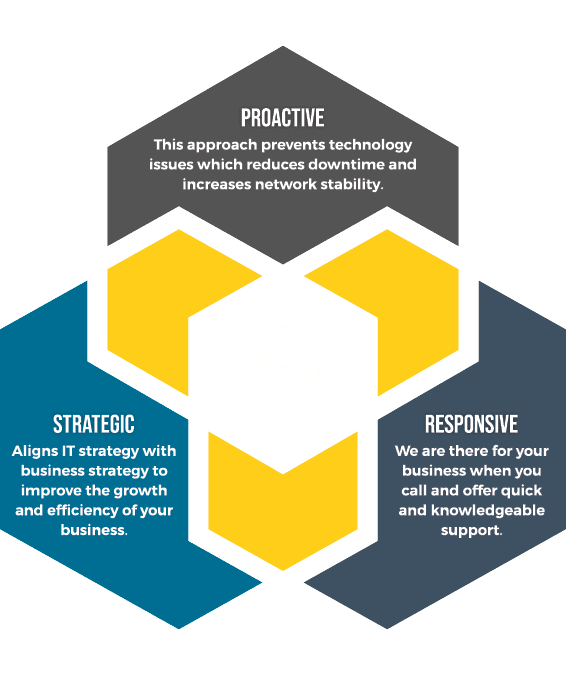
Reactive IT = fixing what’s broken. It’s one facet of a three-pronged approach. Strategic IT = aligning technology with your business goals.
With vCIO leadership and proactive planning, Strategic IT transforms IT from a back-office function into a true growth driver.
It ensures your systems:
- Support scalability as your business grows
- Align with compliance and security standards
- Enable efficiency and innovation
Instead of viewing IT as “just another expense,” Strategic IT helps you see technology as an investment that creates measurable business value.
The Takeaway: Strategic IT Wins
Reactive IT support is necessary as support tickets are inevitable. People break things, and equipment eventually fails, but tickets should never define your IT strategy. If they are your only solutions, you can get stuck in “fix mode”.
Strategic IT prevents problems, minimizes downtime, reduces costs, and aligns your technology with your business goals.
The choice is simple: keep putting out fires or build an IT strategy that keeps the fires from starting.